
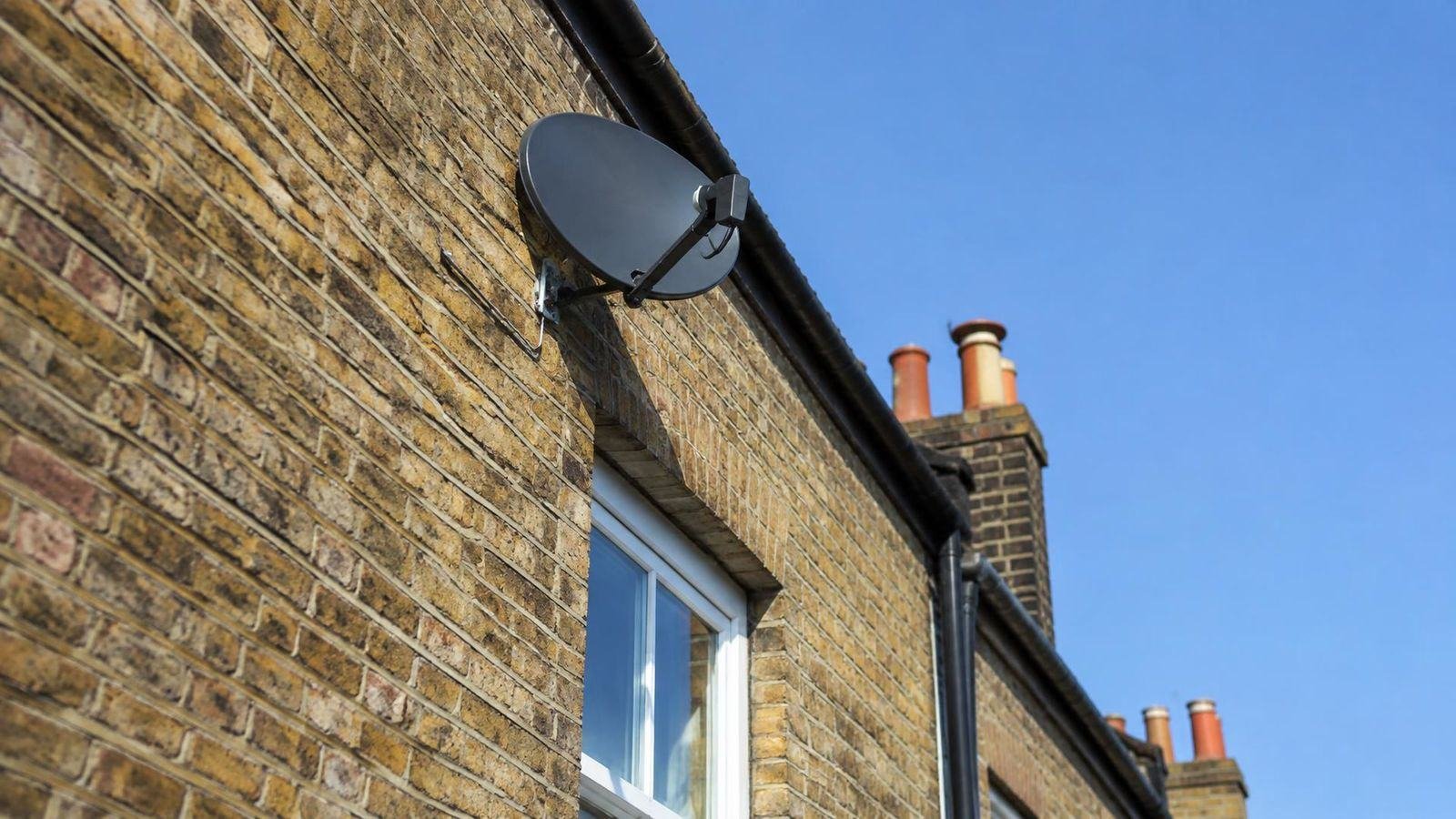
Satellite dishes fitted and repaired in Clapham
Satellite engineers for Clapham houses and flats. We fit new dishes in spots that keep the front of your home tidy and stay within the planning rules, and we repair existing ones when Sky or Freesat loses its picture.
Satellite installation in Clapham: is permission needed?
Most dishes don’t need planning permission, but a few do. Choose where you’d like yours and answer two quick questions to find out where you stand.

Usually fine, and the neatest answer
On a flat roof behind the parapet, a dish is normally allowed without planning permission, as long as it doesn’t stand much above the roof. Best of all, it’s hidden from anyone on the pavement.
Ask us to check my streetSatellite repairs in Clapham: dish faults we put right
Even a dish that’s given no trouble since it went up can fail without warning. Most faults are quick to find once someone is on the ladder with a signal meter.
Tell us what the screen says and when it started. We bring the common parts with us, so most repairs are finished on the first visit, and every box in the house is checked before we go.
- After a gale
- Dishes on chimneys and gable ends catch the wind. A small twist is enough to lose every channel, and realigning it with a meter brings them straight back.
- After the builders
- Scaffolders, roofers and painters often knock a dish or cut its cable. We realign it and replace any damaged lead, even if it now needs a new route.
- Getting worse each summer
- A tree creeping into the line to the satellite causes a fade that worsens every year. Raising the dish or moving it along the wall clears the line.
- Only in wet weather
- Corroded plugs at the dish let in water, so each shower brings blocky squares and frozen frames. New weatherproof connectors cure it.
- After switching to Sky Q
- Sky Q needs a newer type of LNB. If an older one was left on the dish, some rooms or recordings won’t work until it’s swapped.
- Freesat can’t find channels
- If a retune finds nothing, the dish or LNB is usually to blame rather than the box. We test both and replace whichever has failed.
Clapham’s conservation areas
Large parts of Clapham are protected, especially around the Common and the Old Town. That mostly affects the front of the house, not the back.
Two councils
Clapham is split between Lambeth and Wandsworth, and each keeps its own map of conservation areas. Your council tax bill tells you which one is yours.
Front versus back
The rules are about what can be seen from the road. A dish at the back or on the roof behind a parapet is usually fine, even in a conservation area.
Smaller dishes
Sky and Freesat dishes are already small, about two feet across. Where looks matter, we choose the smallest dish that still holds a picture in heavy rain.
If permission is needed
We can give you photos, the dish size and the exact position for your application, and fit it as soon as it’s approved.
Choosing the spot on the day
We never drill until we know the dish will work where you’d like it. This is how we decide, usually within the first half hour of the visit.
Trees and taller buildings
Big garden trees and the backs of taller houses can block the view. We check from the spot itself with a meter, allowing for summer leaves, before anything is fixed.
The cable into the house
We bring the cable in through a small hole with a sealed sleeve, close to where it needs to go, so there’s no long run across the brickwork.
Where the box sits
Tell us where the TV and box will live, and the cable comes out of a neat wall plate right there.
Your say on the position
If two spots work equally well, you choose. We’ll hold the dish in place first so you can see how it looks from the garden or the road.

Too many dishes on the house?
Many Clapham houses have collected two or three dishes over the years, most of them no longer connected. Clearing them away is a quick job, and it makes a real difference to how the house looks from the street.
Finding out which one works
We test each dish and cable, so you know exactly which ones are still in use before anything comes down.
Taking the rest down
Unused dishes, brackets and cables are removed and taken away with us.
Making good
Fixing holes are filled with mortar and cable clips taken out, so the brickwork looks clean again.
Moving the one you keep
If the working dish is on the front, we can often move it to the back or the roof on the same visit.
Beyond dishes: more from us in Clapham
Aerials, repairs, cameras and screens, fitted by the same engineers.

New TV aerials in Clapham
On the chimney, a wall bracket or in the loft.

Aerial repairs in Clapham
Missing channels found and fixed, often the same day.

CCTV in Clapham
Cameras and video doorbells you can watch from your phone.

Audio visual in Clapham
Screens, speakers and simple control for any room.

TV wall mounting
Screens fixed level and secure, with the cables out of sight.
Clapham satellite repair and installation questions
Straight answers to the things we hear most on WhatsApp and the phone.
Will a Clapham dish need planning permission?
Usually not, for one dish on a house. In a conservation area, a dish facing the road does need permission, and a listed building always needs consent.
Can a dish go on a flat roof?
Yes. Behind a parapet is often the best place on a Clapham terrace, as it gets a good view and stays hidden from the road.
How do I know if I’m in a conservation area?
Check the conservation area map on the Lambeth or Wandsworth council website, or tell us your street and we’ll check.
Can one dish serve two flats?
Yes. A dish with a multi-output LNB gives each flat its own cables and its own subscription.
Will a dish at the back still get a picture?
Usually. The dish needs a clear view low in the south-eastern sky. We check that before choosing the spot.
Could my dish come down from the front wall?
In most cases, yes, to the back, the side or the roof, with the old fixing holes filled.
What size is a satellite dish?
A Sky or Freesat dish is about two feet across. Larger dishes are only needed for some channels from abroad.
Do you take old dishes away?
Yes. We remove unused dishes, brackets and cable, and fill the holes they leave.
Can you fit the dish for Sky, or do I have to wait for them?
We fit and align dishes for Sky and Freesat. Your subscription is between you and the provider.
Can satellite TV reach other rooms?
It can. Each room gets its own cable from the dish, or for Sky Q, a Mini box on your home network.
Can the dish go on a chimney?
Yes, on a smaller dish, as long as it doesn’t stick up above the top of the stack. It’s a good option on houses without a flat roof.
Does the dish need to be cleaned?
No. Rain keeps it clean enough. If the picture fades in wet weather, it’s usually water in a connector rather than dirt.
Will my neighbours be able to see the dish?
From their back windows, possibly. We choose a spot that keeps it as discreet as the signal allows.
Sky says there’s no signal. Is it the dish or the box?
If every channel has gone at once, it’s almost always the dish, the LNB or the cable. We test each in turn and fix the one that’s failed.
Can you fix a dish that someone else installed?
Yes. We repair and realign any make of dish, whoever put it up.
Is it worth repairing an old minidish?
Often, yes. If the bowl and bracket are sound, a new LNB and a realignment can give it years more life.
How do I book a satellite installer in Clapham?
Call 020 7205 2161 or send a WhatsApp with your street name, and we’ll check the rules and book you in.
Still got a question?Ask the engineer who’d do the job.
Satellite repairs or a new dish in Clapham?
Satellite engineers based just over the common in Battersea. Tell us your street, or what the screen is showing, and we’ll take it from there.
Satellite engineers near Clapham
More in Clapham
Across London